Patients lift systems allow caregivers health professionals, caregivers and patients to safely and comfortably transfer and lift their patients. The systems are ideal for patients who have limited mobility. This includes elderly, people with disabilities and patients recovering from surgery or injury.
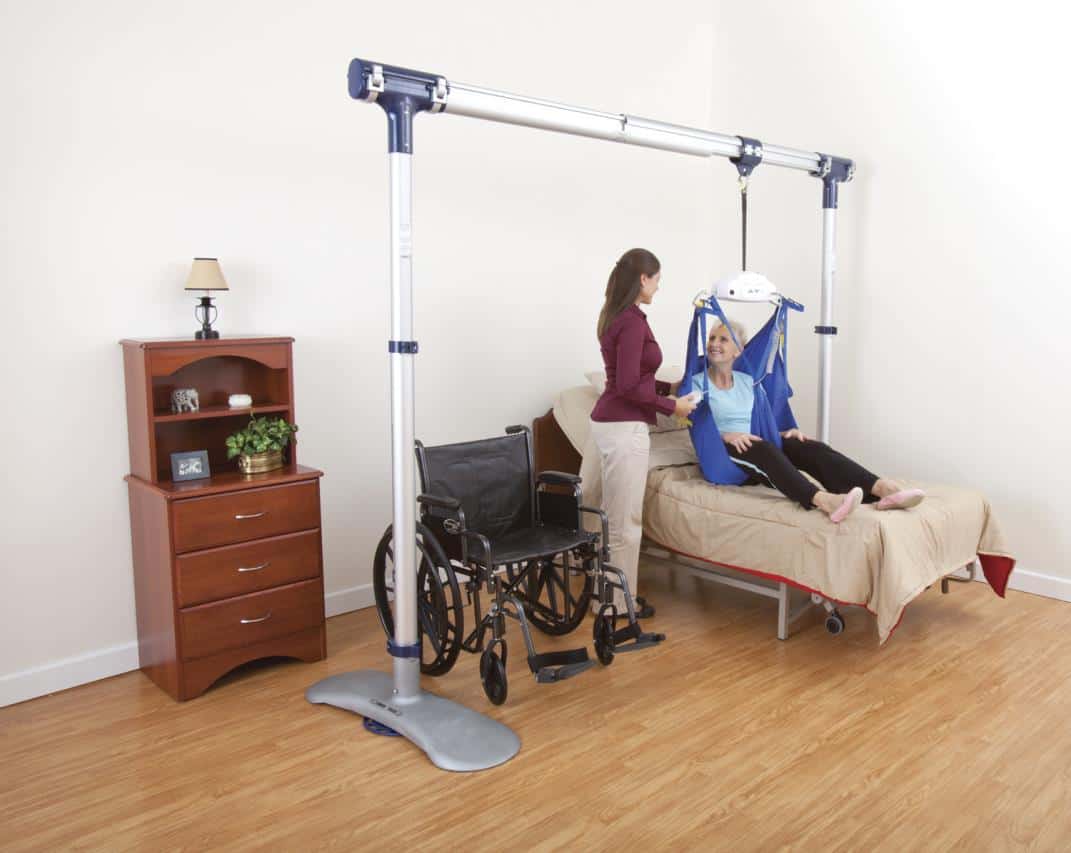
There are a variety of types of lifts for patients, including overhead Hoyer lifts as well as mobility lifts. In this post, we’ll explore each of these systems in detail, and then highlight the advantages of each.
Mechanical lift transfer
Mechanical lift transfer uses either an electric or hydraulic mechanism to lift patients and transfer them. It is made up of a lift, a Sling and a base that is mounted on wheels. The lift unit connects to the sling, which is wrapped around the patient and then lifts the patient up from a lying or seated position.
It’s a safe method to transfer patients as it reduces the risk of injury for both the caregiver and patient. The lift unit does the majority of the heavy lifting, reducing the strain on caregivers. The mechanical lift transfer system is ideal for home care environments since it permits easy movement even in tight spaces.
Overhead hoyer lift
The overhead Hoyer lift utilizes an overhead track for the transfer of patients. It comprises a track mounted in the ceiling, a lift unit connected to it and a sling that is wrapped around the patient.
The overhead Hoyer lift offers a quick and safe method to transport patients from one room to another. It also permits a simple transfer from a bed to a wheelchair or Commode, decreasing the chance of injury and falls.
One of the main benefits of the overhead Hoyer lift is that it allows for the freeing up of floor space since the lift system is suspended from the ceiling. This is especially useful for rooms that have limited space. In addition the overhead Hoyer lift can support higher capacity than other patient lifts, making it suitable for bariatric patients.
Mobility lift systems
Mobility lifts allow patients who are unable to move around their home or different environments. The base unit is equipped with wheels and the arm that lifts it is encased with an sling. The patient is placed in the sling and lifted up by the arm that lifts.
Patients who are in need of help with mobility and are unable or walk on their own will benefit from a mobility lift system. They’re a reliable and secure means of transportation that helps patients maintain their mobility and independence, as well as their quality of living.
The portability of mobility lift systems offers a variety of advantages. Mobility lifts are easily transportable from one place to another. This makes them an ideal option for various environments. Mobility lifts are easy to operate and require minimal physical effort from the caregivers.
Selecting the most suitable patient lift system
Be aware of the mobility of the patient the patient, their weight and size and any other environmental conditions that they may be placed. It is also crucial to consider the caregiver’s physical capabilities and limitations, as well as the cost.
Hoyer overhead lifts are the ideal choice for patients with limited mobility who need frequent transfers. The overhead Hoyer lift is simple to operate, offers an effective, safe way of moving patients and provides more available floor space. However, it is costly and requires installation and maintenance, which makes it ideal for long-term facilities.
Mechanical lift transfer can be a great tool in a home care setting. It is easy to use, requires minimal physical exertion from caregivers, and is affordable. Before you invest in this equipment it is essential to think about your specific circumstances. In order to ensure that you’ve made the right decision, start by conducting research and talking to industry experts. Doing so will increase the probability that you’ll ultimately discover an item that is suitable for your needs precisely and is within your budget. If you are armed with all the facts and figures to make a choice, deciding on mechanical lift transfers will be easy!
For more information, click patient lift systems